The last hinge pin was an inch too long.
Wade found that out the honest way, on a ladder in the gateway with a hammer in one hand and the gate's left leaf leaning on his shoulder. Sorrel had forged the pin that morning from a wagon axle. It was a good pin. It just didn't care what size the hole was.
"Give it here," Hild said.
She had come up behind the ladder without a sound, which for a wolf her size took effort. Gray hair, gray ears straight up, the long axe she always carried slung across her back. She was the war-leader of the wolf-kin pack that had walked into his fort to kill him and stayed to hold its walls. She had a burn scar up her right forearm, and she was frowning at the hinge.
"I've got it," he said.
"You've had it since noon."
"I've had it since eleven. Noon was when I started swearing at it."
She held out her hand. He looked at it, then at her face. Her ears were tipped toward the east wall, where the watch would change in an hour. Her axe hook by the stable door was empty. She'd been carrying the axe since dawn, to every corner of the fort, for no reason.
He put the pin in her palm. Then the hammer.
"Hold it square," he said. "When I lift, you drive."
She held it square. He set his shoulder under the oak leaf and lifted, and the gate came up a quarter inch on its strap. Hild hit the pin once. It went home with a sound like a bell, all the way, inch and all.
"Huh," Wade said.
"It needed hitting." She handed the hammer back and stood there with her empty hands at her sides, opening and closing them, like she'd set something down and couldn't remember where.
The fort had been a burned ruin when he took it. A border fort forty years dead, a well and a lot of black stone, posted on the guild board as a five-mark vermin job. He'd been summoned into this world in the middle of a burnover in Montana, handed the class everybody laughed at, and sent here to get rid of him.
Now there were about two hundred and twenty people inside its walls.
From the gateway he could see most of them. Fox-kin in pairs on the wall walk, tall pointed ears and long red tails bound up out of the way, keeping the watch by their own rota. Wolf-kin in the yard, broader and grayer, rebuilding the south-east breach one fieldstone at a time. A charcoal-burner's mule. Two kids chasing a hen. Tobb Merrin on an upturned barrel with a guild ledger open on his knees, checking the meal sacks against it with a stub of pencil.
Beyond the wall the firebreak ran all the way round the fort, thirty paces wide. In spring it had been scraped dirt. Nine days ago the forest burned. The ring burned with it, on purpose, and now everyone called it the black. It was the safest ground for miles, and it was going green. Grass shoots, fireweed, a few brave ferns. He liked looking at it more than he could explain to anyone in this world.
"They slept," Hild said.
He turned.
She was looking at the stable in the north corner, where her Greymantle wolves bunked. Her jaw had a set to it, and her ears had gone back flat against her skull.
"Last night," she said. "I stood in that door at moonrise. Then at midnight. Then before dawn. Thirty-one wolves. Nobody on the wall but foxes." She paused. "Torvald snores like a rockslide. Brann snores like a smaller rockslide. Nobody woke."
"That's good."
"Thirty-one wolves. Nobody on the wall. Nobody died."
He didn't answer. There wasn't anything to add to it, and she didn't want him to. She'd led thirty-one wolves out of a den fire and left eleven behind, and she wore a carved bone ring in her left ear for each of the eleven. Since then the pack had slept in shifts, with a wolf awake on every side of every camp. Every night at Cinderwatch, his fort, they'd done the same, because Hild couldn't stop.
Last night she'd stopped. Or the foxes had stopped her. He suspected the foxes.
He looked at her, the hard line of her mouth, the broad shoulders under scorched hide armor, the empty hands. She was nearly his height. She had a low laugh that surprised everyone, including her, and she hadn't used it in three days.
"You could sleep tonight," he said. "Yourself. All night."
"Wolves don't sleep all night."
"Wolves just did."
Her mouth moved. It wasn't the laugh, but it was close to where the laugh lived.
On the wall above them, a fox archer had left her sandals on the walk to dry. Next to the sandals, Senna Redbrush lay flat on the warm stone with her eyes shut and her arms folded behind her head, like she owned the wall and the sun and possibly the fort.
"Is that the watch?" Wade called up.
"That's the watch's captain," Senna said, without opening her eyes. "The watch is over there. Pell and Quill. They're very good. I trained them."
"You're asleep."
"I'm listening with my eyes shut. It's a fox thing. Humans wouldn't understand." One amber eye opened a slit and found him. "You've been hammering that pin since noon, Tamer. The whole ridge can hear you."
"Since eleven."
"Since eleven, then. Hild, take his hammer away."
"I did," said Hild.
Senna shut the eye again, satisfied.
Her ears weren't asleep. Wade watched one of them swivel north, toward the ridge. The other one, the left with the old notch in it, turned after it.
Senna opened her eyes.
From the ridge came a whistle. Two short notes and a long one. A Redbrush lookout's call: people coming, not fighting.
Senna sat up.
Tamer. Her voice arrived in the back of his head, dry and close, without crossing the yard. That was the Line, silent speech, a voice only he could hear. One rider. The town road.
It came with the Bond, the one real power of the Tamer class. The Bond only worked on people who chose it. Senna had chosen it in the spring, and kept choosing it.
Hounds? The Ashen Hounds had burned clan camps for bounty money all spring. Nine days ago they'd broken on his gate.
A pause. He felt her look, the way you feel someone grinning in the next room.
No, she said, dragging it out. A cat.
By the time the mule reached the gate, the whole fort was watching.
It came up the road across the black at a patient crawl, white-crusted with salt and loaded high. A woman sat on top of the load with her legs crossed, perched on the sacks in a way that should have tipped her off at every rut and didn't. Wade had climbed to the gate wall. Senna was beside him. Hild stood in the gateway below, her jaw locked.
He knew the rider. He'd met her once, in Thornreach, the guild's border town, on the night the guild paid out its bounties. She'd been selling salt to the cook of the man who'd burned Hild's den.
Her name was Mireille Duskpaw.
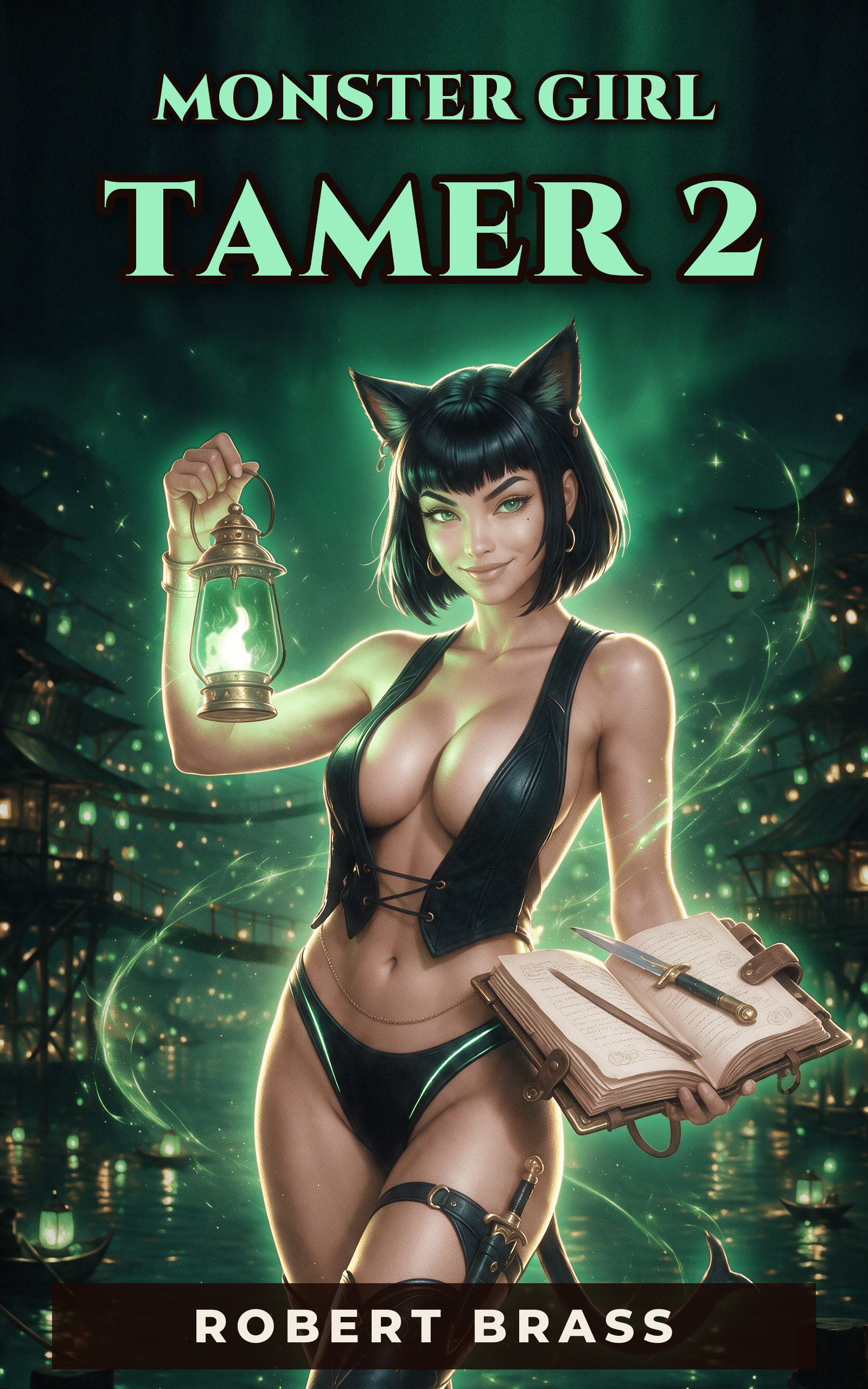
She was cat-kin, from the river clans. Black ears, black hair cut sharp at the jaw, a black tail hanging down the mule's flank with a kink near the tip. Gold hoops in both ears. A merchant's ledger open on her knee.
She'd told him the news from the saddle. The clans have called the Moot, darling. Seven years early. They've called it about you.
Her tail had twitched at the tip when she said it.
Now she finished whatever she was writing, blew on the page and closed the ledger on one finger. She swung down off the sacks. She did it without hurrying and without looking where she landed, and landed exactly right.
Nobody had invited her in.
"Come and share the fire," Mireille said to the gateway at large. "Eat what we have. You're under our roof until the sun."
Every fox on the wall went stiff. Hild's ears went flat.
They were the guest words. Wade had heard Hild say them, the first night, standing over a pot of venison with an axe in her other hand. In the clans' oldest law, a guest who shared your fire couldn't be harmed until dawn. The host said the words. The guest didn't.
Mireille said them in the host's voice, perfectly, like a woman reading a price off a board. Then she walked through the gate past Hild, close enough to brush tails, and stood in the yard looking around with frank interest.
"That's not how it goes," Hild said.
"It's how it goes when nobody else says it, darling. I've been standing out there long enough to sell this mule twice." Mireille looked up at the wall. "Hello, Tamer."
"Hello."
"You built a gate." She tilted her head at it. "It's new. The hinges are honest. Who taught a human to hang oak?"
"A wolf with a hammer."
"Did she." Mireille's green eyes went to Hild and came back amused. "I'll take tea, since nobody's offering anything."
He came down off the wall into the gateway. Hild didn't look round. As he passed her, her hand came up and closed warm and heavy on the back of his neck, once. Then it let go. Wolves did that in a crowd. It meant I know where you are.
There was a rule in him older than any clan law, from twelve seasons on fire crews: when someone walks into camp with news, you sit them down and feed them before they talk. Fire camps ran on coffee. Cinderwatch ran on pine-needle tea, which tasted like a Christmas tree and was the closest thing he'd found.
"Tea," he said. "In the hall. You're our guest."
"I said I was."
"Now I've said it."
That landed. He saw it land. She looked at him a half second longer than the joke needed, her head on one side, and then she smiled like a door opening.
The hall was the old fort's great room, roofed again with pine and shakes. The hearth had been cooking since dawn. He put the kettle on himself.
Senna came in behind him and sat on the long table instead of the bench. She always sat on things instead of chairs. Tall, copper braid down her back, a short horn bow she didn't put down. Her ears had swung toward Mireille like two weathervanes catching a new wind, frankly greedy.
Hild came in last and stood by the door. She didn't sit.
Mireille looked over the hall the way a buyer looks over a horse. Then she chose a bench. Not the good one by the fire. The short one against the back wall, the one nobody liked because it was drafty and faced the door. She sat on it with her back to the stone and her tail curled round her ankles, and set her ledger on her knee.
He noticed she'd done it without seeming to choose it at all.
He noticed other things, because he had eyes. Next to Hild she was compact, and next to Senna she was curved, balanced like a dancer between steps. She moved as if the floor had been designed for her. The gold hoops caught the fire. There was a beauty mark under her left eye that he hadn't seen in Thornreach, because that night he'd been looking for knives.
He poured the tea and set the cup in front of her. He didn't look at the ledger.
Mireille watched him not look at it. Her eyes went from his face to the ledger and back, quick, as if she'd dropped a coin and wasn't sure he'd seen. Most people looked at the ledger first. Most people wondered what was in it about them.
"You don't look," she said.
"At what?"
"Never mind." She opened it, licked her pencil and wrote.
"Water," she said, writing. "From your well, which I'm told is good. Two bits."
"The well's free."
"The well is free. Hauling it isn't. Somebody hauled it. Leaves, one pinch. A bit. The cup." She lifted it and turned it in the firelight. "Clay, local, a crack in the glaze. A bit. The insult of pine needles, which I'll drink anyway because I'm polite." She wrote a last line and underlined it. "Five bits. You can pay me after the news."
"I didn't ask you to bill me."
"Nobody ever asks. That's why it's always a surprise."
Senna laughed out loud. Then she caught herself and looked annoyed.
"Cats," Senna said, to the room. "Every cat I ever met had a long tail."
Wade knew that one. A long tail, to a fox, was a lie that sounded true.
"Foxes," said Mireille, unbothered. "Every fox I ever met thought they'd invented lying."
"Cats bring fleas," said Hild from the door.
"Wolves bring wolves. I'd take the fleas."
"Duskpaw prices," Senna said, swinging one boot. "My grandmother paid a Duskpaw boatman a mark to cross a creek she could have jumped."
"Your grandmother wanted to arrive dry and gossip about it for thirty years. I'd say she got her mark's worth."
"Drink your tea," Hild said.
Mireille drank her tea.
She did it slowly, with enormous enjoyment, looking at Hild over the rim the whole time. The fox on the table and the wolf by the door watched her with exactly the same expression. Three generations of clan feud between their grandmothers, and here they were, shoulder to shoulder against a cat.
Wade decided not to say anything about that. It was the best thing he'd seen all week.
"Everyone in this fort wants to know what I'm here for," Mireille said, setting the cup down. "I'm the only one who wants paying first."
"That's either very honest or very cheap," Senna said. "Which?"
"Darling. Both. It's the only way to be either."
The fort heard about it from Torvald, who had been asleep sitting up against the hall wall outside the window and woke up for the good part. Within a quarter hour the window was full of ears.
Wade sat down across from Mireille. He put his elbows on the table.
"The Moot," he said.
"The council of all the clans. Every fox, wolf, cat, bear and rabbit people from the river mouths to the high hollows, one voice to a clan." She said it like she was reading a menu. "It sits once every seven years, at the Moot Stone, under the full moon. The next one wasn't due for seven years. It's been called now."
"About me."
"About your fort." She flicked a finger at the walls. "A human hall. Six clans living inside it under clan law. Nothing like it since before anyone's grandmother. The clans have to decide what it is, so they've called the Moot to decide."
"Who called it?"
"They did." Her tail tip twitched against her ankle. "The clans."
He saw it. He'd seen it at the gate, the same small jerk on the same word. On a fire line you learned to watch the one thing that moved wrong in a still picture. A single tree torching in a stand of green. A ridge-top lookout who'd gone quiet.
He didn't say anything about it. He just looked at her, and she looked back with clear green eyes and a face like a closed shop.
"What happens if they decide against it?"
"That's the expensive one." She tapped the pencil on her teeth. "I'll give you the shape. Every family in your fort came from a clan. If the Moot says your hall isn't a hall, their clans call them home. Some will go. Some won't, and then they're nobody's."
He thought about the kids chasing the hen in the yard. About Rusk's foxes, and the wolves asleep in the stable for the first time in a year.
"And if it decides for us?"
"Then you're something nobody has been in two hundred years, and everyone will want to know what that costs." She smiled. "Including me."
"When does it sit?"
"That's extra."
"How much?"
"Questions after the third are extra. That was your fifth." She wrote it down. "I'll put it on your account. You already owe me a favor. I'm a patient woman."
"You're not."
"I'm patient with debts. It's the only thing I'm patient with." She closed the ledger halfway. "Here's what I'll give you for the tea. The Moot is a long way from here, in the clans' heartland, and you don't know the road. I do. Every barge on the Sallow, the big river east of your forest, belongs to my clan, and the Duskpaw carried the call to every hollow. I'll take you there."
"At a price."
"At a price."
"Then no," Wade said.
Her pencil stopped.
It hung over the page for a breath, a beat, not moving. She looked at him. Something went across her face that wasn't amusement, a kind of quick recalculation, like a gambler who'd just watched a man fold aces.
Then the pencil moved again.
"No to the price," she said, "or no to me?"
"No to buying a road I can find myself. We'll ask the Redbrush. Senna's people know the Thornwild."
"The Thornwild ends three days east," Senna said. "Past that it's cat country. Rivers."
The Thornwild was her forest, every ridge of it, and the only one he knew.
He looked at her. She shrugged, one shoulder.
"I'm not helping her," Senna said. "I'm telling you where the map runs out."
"We'll find our own way," he said, to Mireille. "Thank you for the news."
Mireille smiled at him. It was a different smile than the one at the gate. This one had no teeth in it at all, which was somehow worse.
She reached into her left sleeve.
Hild was off the door before the hand came out. She left the axe where it was. She just loomed up at the end of the table and stood there.
Mireille didn't look at her. She set something on the table between the two cups, very gently, the way you set down a thing you don't want to wake.
A knife.
A plain guild blade, a hand and a half long, with a wooden grip. Somebody had burned a mark into the wood with a hot iron. Two keys, crossed. Wade had seen that badge before, on the coats of guild riders at his gate. The fuller down the middle of the blade was black with something dried.
Hild's ears went back. Her jaw set like a trap closing.
"Where did you get that?" Wade said.
"From a man on the forest road. At dawn. About six miles from here." Mireille turned the knife a quarter turn with one fingertip, so the grip pointed at him. "He was sitting in a hollow beside the road, out of the wind, where he could see a long way down it. He'd been sitting there two days, by his fire pit. He had a good bow, a bad horse and this. He didn't sell salt and he didn't buy it."
"You killed him."
"He tried to kill me first. I didn't let him." She said it the way she'd said the price of the cup. "I don't like men who sit beside my roads. I asked him who he was waiting for. He didn't want to tell me, so I asked him differently."
Senna had gone very still on the table. The tall copper ears had tipped toward the table. Not toward Mireille now. Toward the knife.
"Waiting for you?" Senna said. "A cat on a salt mule?"
"Not me, darling." Mireille folded her hands on the closed ledger. The firelight caught both gold hoops at once.
She looked across the cups at Wade.
"He was coming here, darling."